
Ultimate Sahara Desert Trip from Marrakech: Complete Guide to Morocco’s Desert Adventures
The air in Marrakech, the “Red City,” is perpetually buzzing, scented with spice, and alive with the chaotic rhythm of the medina. Yet, just beyond the ancient walls and the sensory overload, lies a world of profound stillness and breathtaking beauty: the Moroccan desert. Taking a desert trip from Marrakech is not merely an excursion; it is a quintessential Moroccan experience that swaps bustling souks for boundless golden sand dunes and star-dusted skies.
For those planning a memorable Morocco desert trip from Marrakech, understanding the geography and duration of the journey is crucial. Morocco offers several distinctly different desert experiences, ranging from quick day excursions just outside the city to epic, multi-day journeys deep into the majestic Sahara. Whether you seek a luxurious private escape, a budget-friendly group adventure, or a rapid Agafay Desert tour, this complete guide will help you choose the ultimate desert experience tailored to your time and travel goals.
Choosing Your Desert Adventure: Agafay vs. The True Sahara
When planning a Marrakech desert tour, travelers often encounter three main destinations: Agafay, Zagora, and Merzouga. Each offers a unique landscape and demands a different time commitment.
The Nearby Escape: Agafay Desert Day Trips
If you are short on time but crave a desert atmosphere, the Agafay Desert is the ideal solution. Located just outside the bustling city—a mere 40-minute drive from Marrakech—Agafay is a perfect sahara desert day trip from Marrakech destination.
It is important to note that the Agafay Desert is not a traditional sand desert. Instead, it is characterized by its rocky, arid hills and stony landscape. Despite the lack of towering golden dunes, Agafay provides a stunning, tranquil environment with beautiful views of the majestic Atlas Mountains on the horizon.
Popular Agafay Desert Tour Options:
The wide variety of tour options available in the Agafay Desert are designed to suit different budgets and time constraints, from sunset tours to overnight stays.
- Desert Safari Day Trips: Tours often combine activities like quad biking, relaxing by a pool set amidst the desert sands, and a traditional camel ride Marrakech desert. Some popular full-day excursions can last between 5 and 8 hours.
- Sunset & Dinner Tours: An enchanting way to experience Agafay is through a dinner and sunset tour, often including a thrilling quad bike ride or a peaceful camel trek. These unforgettable journeys culminate in savory authentic Moroccan dinners, sometimes accompanied by live traditional music and entertainment under a starlit sky.
- Luxury Experiences: Travelers can indulge in private, luxurious lunch experiences, featuring traditional Moroccan cuisine and the opportunity to cool off with a relaxing swim in a desert pool.
- Overnight Stays: For a more immersive experience, 1-night or 2-day tours are available, allowing guests to sleep at a cozy desert camp (bivouac) under the stars and enjoy dinner and breakfast.
The Epic Journey: True Sahara Destinations
If your heart is set on the iconic, massive golden dunes (the landscape that travelers typically envision when they hear “Sahara”), you must embark on a multi-day sahara trip from Marrakech to one of the desert gateways further east.
The true Sahara Desert stretches north-south along Morocco’s eastern border with neighboring Algeria and is the world’s largest hot desert. These longer trips are essential because the main desert dunes are significantly far from Marrakech.
The most popular destinations, organized by proximity, are:
- Zagora (2 Days Minimum): The minimum time needed to reach actual dunes, though they are smaller and the trip involves extensive driving.
- Merzouga (Erg Chebbi) (3 Days Recommended): The definitive destination for massive, picture-perfect golden dunes, requiring at least three days.
- Erg Chigaga (3-4 Days Recommended): A more remote and wild desert experience, known for higher dunes and fewer crowds, only accessible by 4×4.
The Ultimate Sahara Expedition: Merzouga (Erg Chebbi) Desert Tours
For most travelers seeking the classic desert vista, Merzouga, which is the gateway to the stunning Erg Chebbi dunes, is the recommended destination. Erg Chebbi is famous for its towering golden sands, reaching heights of over 100 meters, which are often mistakenly called the Sahara Desert by tourists due to their impressive scale.
The journey from Marrakech to Merzouga is approximately 560 kilometers (350 miles) and involves 8–10 hours of driving one way. Because of the extreme distance, tours typically span 3 day desert trip from Marrakech or longer.
Duration Deep Dive: 3-Day vs. 4-Day Tours
When choosing a desert tour Morocco to Merzouga, travelers usually select between the 3-day and 4-day options, both available as a round trip back to Marrakech or ending in Fes.
3-Day Desert Tours: A Quick but Rich Experience
The 3 day desert trip from Marrakech is the most popular choice as it efficiently provides enough time to reach the real, massive Sahara dunes.
- Pros: Great for tight schedules, includes camel trek, full sunset and sunrise experiences, and covers key landmarks.
- Typical Itinerary:
- Day 1: Marrakech → High Atlas Mountains (Tizi n’Tichka Pass) → Ait Benhaddou → Ouarzazate → Overnight in Dadès Valley/Gorges.
- Day 2: Dadès Valley → Todra Gorge → Merzouga → Sunset camel ride Marrakech desert → Desert Camp overnight.
- Day 3: Sunrise camel ride → Long drive back to Marrakech (or onwards to Fes).
- Limitations: Due to the distance, Day 3 typically involves very long driving hours.
4-Day Desert Tours: A More Relaxed Adventure
If you prefer a slower pace and want to enjoy more scenic stops without feeling rushed, the 4-day tour is the superior choice.
- Pros: Less rush, more time in each destination, additional time for exploration in places like the Dadès Valley and Todgha Gorges, and a more flexible driving schedule. This format allows travelers to maximize their sightseeing endeavors and better soak in the sights.
- Limitations: Requires one extra day in your itinerary and is slightly higher in cost.
What to Expect on the Road: The Scenic Stops
The road journey from Marrakech to the Sahara Desert is considered almost as incredible as the destination itself. The drive is broken up by multiple stops at historical and natural wonders.
- High Atlas Mountains & Tizi n’Tichka Pass: The journey begins with a drive over the scenic Tizi n’Tichka pass (at 7,415 ft/2,260 meters), offering breathtaking panoramic views and a look at Berber communities living in remote villages.
- Ait Benhaddou (UNESCO World Heritage Site): This fortified village, or ksar, is a popular stop, known for its earthen clay, cubic houses and half-dozen large kasbahs. It is a renowned filming location, recognized from movies and shows such as Gladiator, Game of Thrones (Yunkai), The Mummy, Lawrence of Arabia, and Prince of Persia.
- Ouarzazate (The Hollywood of Africa): Often called the “Door to the Desert,” Ouarzazate is known for the Atlas Film Studios and the photogenic Kasbah of Taourirt.
- Dadès Gorge and Todgha Gorge: The route passes through these magnificent geological features. The Dadès Gorges are rugged wadi (canyons) carved by the Dadès river, with walls ranging from 200 to 500 meters high, known for growing roses used in rose water production. Todgha Gorge features towering limestone river walls and winding roads.
Life in the Desert Camp
The highlight of any sahara trip from Marrakech is the overnight stay under the stars.
The Camel Trek
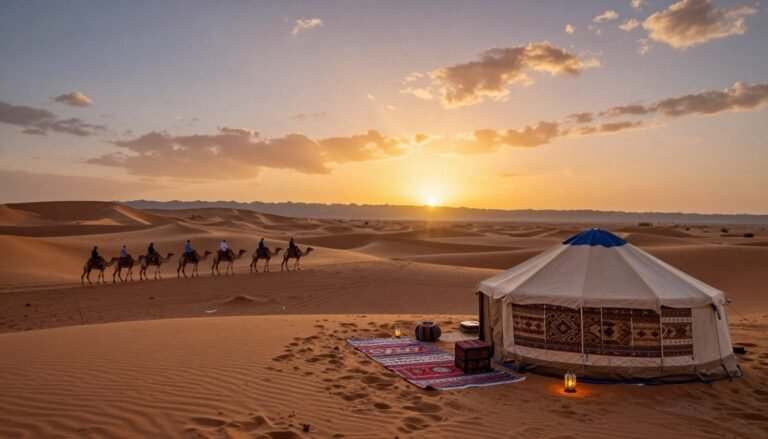
Once you reach Merzouga, you exchange your vehicle for a camel, often called the “ships of the desert,” which have been the traditional mode of transport for centuries. Most tours arrive in the late afternoon so that you head into the Sahara when the sun is beginning its descent. The journey into the camp usually takes about an hour and provides a peaceful, rhythmic sway across the golden sands.
- Tip for Camel Riding: It is recommended to wear long pants to prevent chafing and to hold on tightly during mounting and dismounting. A scarf (chech or turban) is essential for sun protection, warmth, and covering your face in case of blowing sand.
- Ethical Note: While camel rides are included in nearly every tour, travelers sensitive to animal tourism may discuss skipping the segment with tour operators, or may opt to walk alongside the animals.
Desert Camp Accommodation and Experience
Desert camps range from standard (shared bathrooms) to deluxe or luxury options (private tents, proper beds, en-suite bathrooms, and hot water).
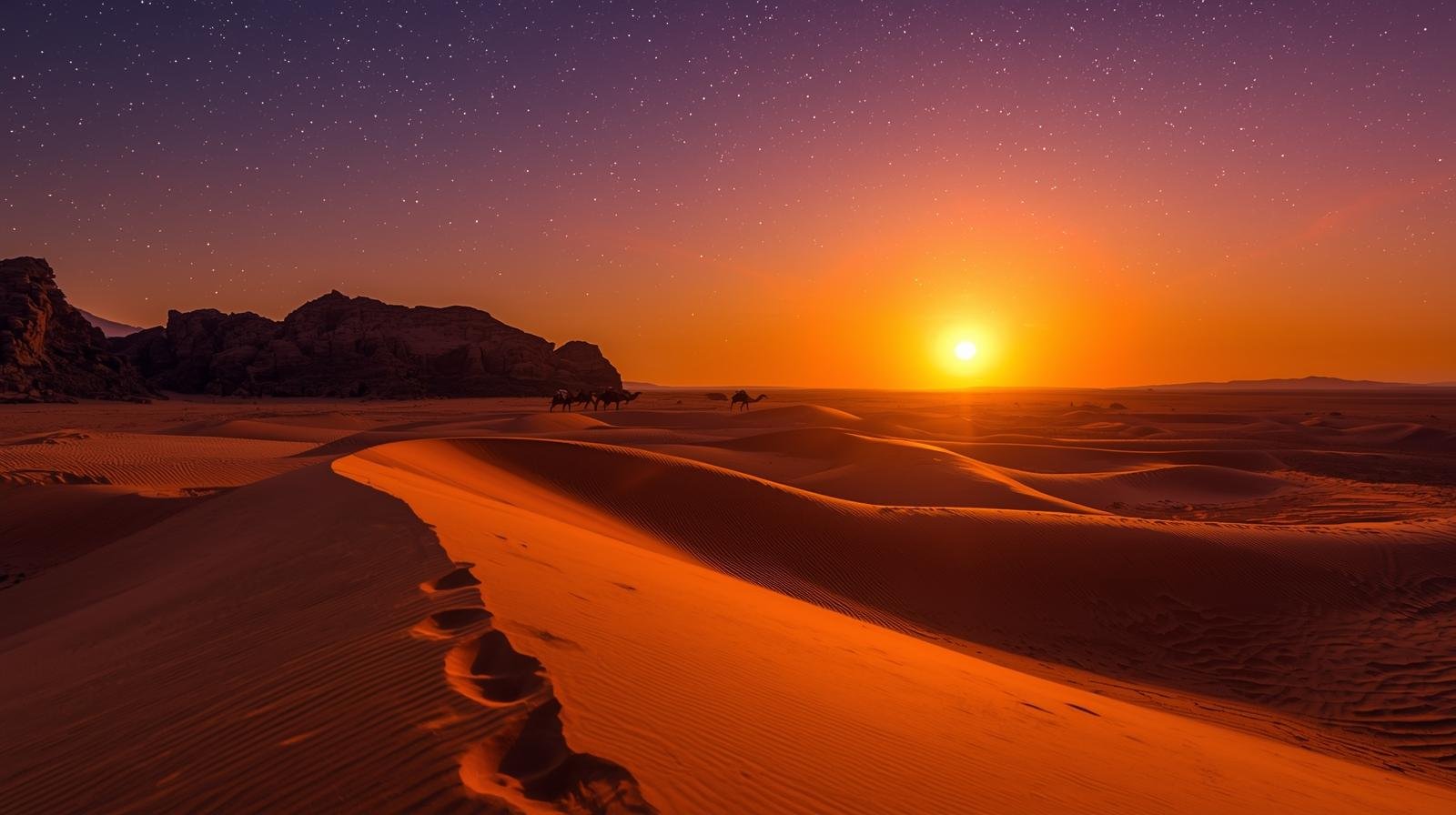
After settling in, you are free to wander the dunes, feeling the warm sand on your feet as you watch the sun set, casting golden hues over the desert. Evenings typically feature a sumptuous Moroccan dinner, followed by a bonfire with traditional Berber music, drumming, and entertainment.
The Sahara truly comes alive at night. Away from city lights, the stargazing is incredible, offering views of the Milky Way that appear so bright they look painted across the sky. Early risers are rewarded with a magical start to the day, witnessing the breathtaking sunrise over the dunes.
Alternative Sahara Routes: Zagora and Erg Chigaga
For travelers whose itineraries do not align with the 3-day Merzouga trip, two other desert options are available when planning a Marrakech desert tour.
Zagora: The Two-Day Compromise
Zagora is the target for the quickest desert excursion, usually completed in 2 days. This option is suitable for those on a very tight schedule, as it is geographically closer to Marrakech (about 6 hours driving one way).
- Landscape: The Zagora desert is primarily rocky, offering small dunes that are generally less impressive than the towering sands of Merzouga. Travelers should be prepared for a very long and tiring drive (spending about 14 hours in a vehicle over two days) for a comparatively brief desert experience of only 3–4 hours.
- Inclusions: Two-day tours typically still include stops at Ait Benhaddou, Ouarzazate, and the Draa Valley, a sunset camel ride, and an overnight in a desert camp.
Erg Chigaga: Remote and Wild
For adventurous travelers seeking a truly authentic, off-the-beaten-path Sahara experience, Erg Chigaga is the destination of choice.
- Distance and Duration: Located near M’Hamid El Ghizlane in the Zagora Province, Erg Chigaga is more remote and requires at least 4 days from Marrakech. The final 60 km from M’Hamid to the dunes is strictly off-road and only accessible by 4×4 vehicles.
- Landscape: Erg Chigaga boasts wilder, higher dunes (some reaching up to 300 meters) and is significantly less touristic than Merzouga.
- Experience: The remoteness of Erg Chigaga means you will see hardly any other tourists and may have entire dunes to yourself. Extended tours (4+ days) allow for exploration of fascinating stop-offs like the ancient Berber libraries in Tamegroute.
Planning Your Perfect Desert Trip from Marrakech
A successful desert tour Morocco requires careful preparation, from choosing the right travel style to selecting the optimal time of year.
Choosing Your Tour Style
Marrakech is the most common starting point for Morocco desert tours due to its major international airport and accessibility to the Atlas Mountains. Tours are often categorized into three types:
- Group Tours: Ideal for budget travelers, solo adventurers, or social travelers looking to meet people. Group tours are more affordable (starting around $80–$150 per person for a 3-day trip) and utilize fixed itineraries and shared transportation (often minibuses).
- Private Tours: Offer flexibility and personalization, best suited for couples, families, or small friend groups. These tours provide dedicated drivers, comfortable 4×4 vehicles, flexible departure times, and the freedom to customize stops.
- Luxury Tours: Focus on high-end comfort, featuring premium transportation (air-conditioned 4x4s), luxurious desert camps with private bathrooms and proper beds, and gourmet meals. These tours are popular for honeymoons or special occasions.
Important Booking Tip: It is highly recommended to book tours with licensed Moroccan travel agencies. Licensed agencies adhere to safety standards (safety-inspected vehicles), employ certified guides, provide catastrophe insurance, and support responsible tourism practices.
Best Time to Go: A Seasonal Guide
Timing is essential for an enjoyable desert experience, as the Sahara environment experiences extreme temperature swings.
| Season | Months | Day Temps | Night Temps | Verdict |
|---|---|---|---|---|
| Spring | March–May | 70–85°F (21–29°C) | 50–60°F (10–15°C) | Ideal weather; comfortable temperatures, green valleys. |
| Fall | September–November | 75–90°F (24–32°C) | 55–65°F (13–18°C) | Another perfect time; warm days, cool nights, smaller crowds. |
| Winter | December–February | 65–75°F (18–24°C) | 35–45°F (2–7°C) | Pleasant days but very cold nights (can drop to freezing); clear skies, fewest tourists. |
| Summer | June–August | 95–115°F (35–46°C) | 70–80°F (21–27°C) | Extremely hot (daytime temperatures can exceed 45°C/113°F); not recommended for sensitive travelers. |
For multi-day camel trekking and desert camping, the period from October to April is the most pleasant. If you are keen on photography, the crisp air and deep shadows of the winter season (November to March) offer unbeatable golden hour light and the best skies for stargazing.
Essential Packing Guide
Proper preparation ensures comfort, particularly due to the desert’s extreme temperature changes and lack of infrastructure. It is suggested to pack a separate, easily cleaned bag (like a rucksack or holdall) specifically for the desert trip to protect your main luggage from the ever-present sand.
| Category | Essential Items | Rationale |
|---|---|---|
| Clothing | Lightweight, breathable natural fibers (cotton/linen). Warm layers (fleece/jacket) for cold nights. Loose pants or leggings for camel riding. Scarf or chech (turban). | Desert temperatures drop dramatically after sunset. The scarf protects from sun and blowing sand. |
| Footwear | Sturdy walking shoes/boots; sandals/flip-flops for camp. Avoid mesh or fine materials that trap fine sand. | Climbing the massive sand dunes requires good support. |
| Protection | High SPF sunscreen and lip balm with SPF. Quality sunglasses with UVA/UVB protection. Wide-brimmed hat or peaked cap. | The desert sun is significantly stronger than in the city. |
| Practicalities | Reusable water bottle. Small daypack. Portable charger/power bank (camp electricity can be limited). Headlamp or small torch. Toilet paper (many remote toilets do not supply it). Cash (MAD) for meals, drinks, and tips (ATMs are rare outside major towns). | Essential for maintaining comfort and functionality away from modern amenities. |
Safety and Cultural Etiquette
Interacting respectfully with local Berber communities is a rewarding aspect of the trip.
- Dress Modestly: Morocco is a conservative nation, especially in desert regions. It is best to dress modestly, meaning loose pants, and shoulders and chest always covered.
- Photography: Always ask for permission before photographing local people; some may request a small tip. Never hand your phone or camera over to a stranger on the main square of Marrakech (Jemaa el-Fnaa).
- Tipping: Tipping is customary. For multi-day tours, plan to tip your driver/guide (around 100–150 MAD per day), camp staff, and camel handlers.
- Hydration: Staying hydrated is crucial. Aim for at least 2–3 liters of water daily.
- Food Safety: Be cautious, especially with street food in Marrakech, and always use bottled water to drink and brush your teeth.
Frequently Asked Questions (FAQs)
Can you do a Sahara Desert day trip from Marrakech?
No, you cannot reach the true Sahara Desert with its massive golden sand dunes (like Erg Chebbi or Erg Chigaga) in a single day from Marrakech. The driving distance to Merzouga is too great, requiring at least 3 days for a proper experience.
A sahara desert day trip from Marrakech will only take you to the nearby Agafay Desert, which is a rocky desert located about 30 km outside the city. While it offers adventure activities like quad biking and sunset camel rides, it does not feature the iconic sand dunes typically sought in the Sahara.
Is the Agafay Desert worth visiting?
Yes, the Agafay Desert is absolutely worth visiting, especially if you are short on time. It offers a unique desert landscape just outside the bustling city. Since the Agafay Desert can be reached from Marrakech in just 40 minutes, it is a perfect day trip destination.
Agafay provides an escape from the city’s hustle and bustle, offering opportunities for thrill-seekers (quad biking) and those seeking relaxation (swimming pools and luxurious lunch experiences). It offers a moment of tranquillity and a unique perspective of the desert’s vastness, providing a wonderful break in nature.
What is the most recommended desert trip from Marrakech?
The most recommended desert trip from Marrakech for most travelers is the 3-Day Tour to Merzouga (Erg Chebbi). This option provides the best value-to-experience ratio, allowing enough time to reach the real, massive Sahara dunes and experience a full sunset and sunrise over the sand.
What are the main differences between a 3-day and 4-day tour to Merzouga?
The key difference is the pace and the amount of time spent at the stops.
- 3-Day Tour: Fast-paced, covers key landmarks, but involves long driving hours, particularly on the final day.
- 4-Day Tour: Offers a more relaxed adventure with slower pacing, additional time to explore scenic stops like the Dadès Valley and Berber villages, and a more comfortable driving schedule overall.
How can I make my desert tour luxurious?
To enhance your luxury experience, choose a private tour with upgraded accommodations. Luxury desert tours typically feature private 4×4 vehicles, gourmet dining, and most importantly, premium desert camps that offer proper beds, private en-suite bathrooms, and hot water, which is highly prized after a day in the desert.
The journey from Marrakech to the edge of the great Sahara is a path of dramatic transformation, taking you from the vibrant energy of the city, through the towering silence of the Atlas Mountains, to the endless, rippling gold of the dunes. Whether you choose the quick, rocky thrill of an Agafay Desert tour or commit to the awe-inspiring distance of a 3 day desert trip from Marrakech to Merzouga, you are guaranteed an encounter with a land and culture that will leave an indelible impression on your heart.
Feel the cool sand beneath your feet, let the rhythmic sway of the camel carry you toward a fiery sunset, and witness the Milky Way painted across the darkest sky you have ever seen.
Pack your bags and experience the magic of Morocco’s sands.

One Comment