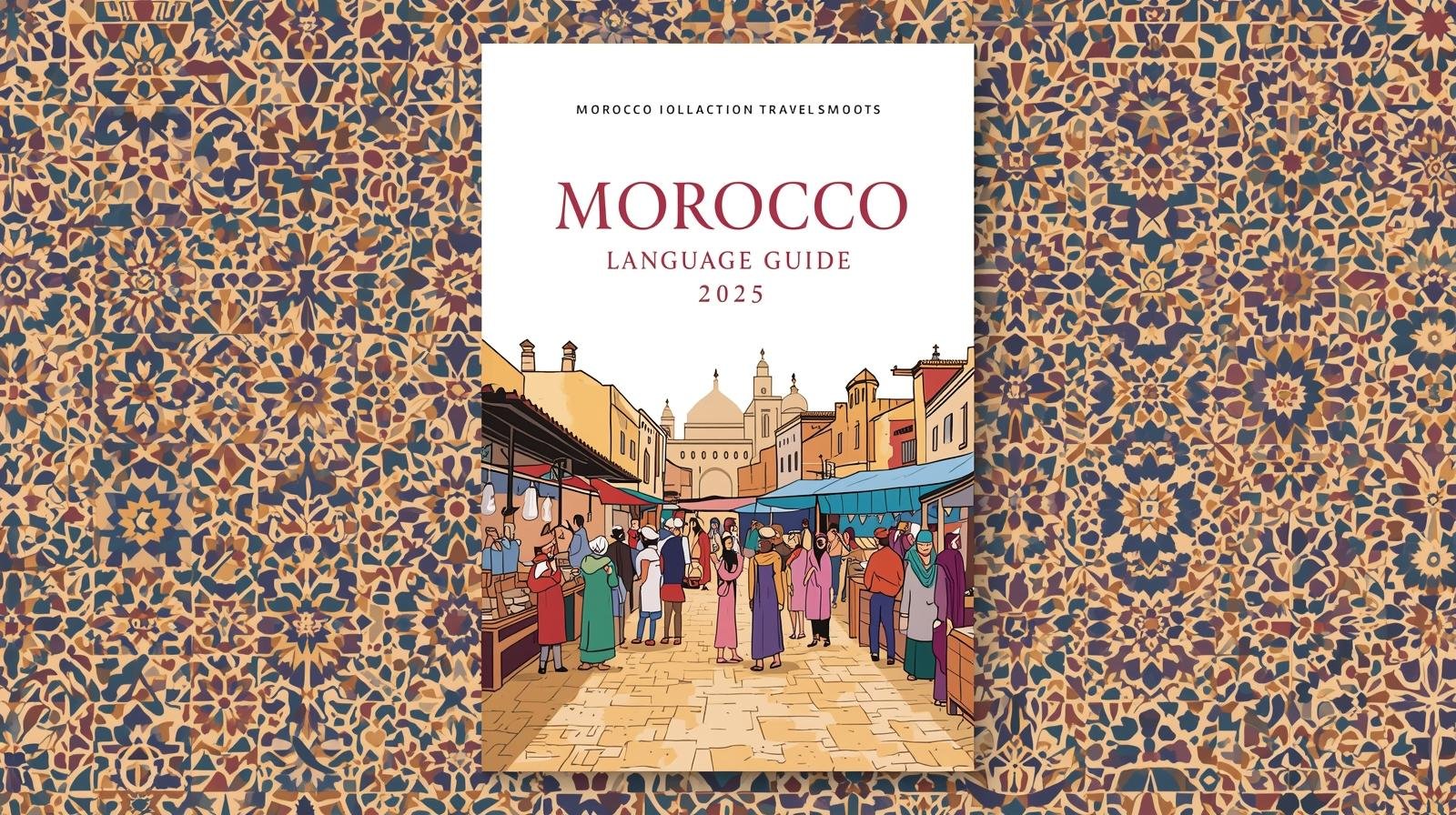
What Language Do They Speak in Morocco? A Practical Travel Guide
If you are planning an adventure to the “Red City” or trekking through the Atlas Mountains, you are likely wondering what language do they speak in Morocco. You have come to the exact right place. Morocco is far from a monolingual country. Instead, it is a vibrant, living tapestry where ancient history, diverse geography, and modern global trends create a truly unique linguistic environment.
As you step out of the airport and into the warm North African air, you will immediately hear a symphony of sounds. You might hear a shopkeeper negotiating in French, a call to prayer echoing in Classical Arabic, two friends laughing in Darija, and a tour guide welcoming visitors in perfect English. Whether you are navigating the winding alleys of a historic Medina or riding a camel into the Sahara, understanding how Moroccans communicate will deeply transform your travel experience. You do not need to become a fluent linguist to enjoy your trip, but knowing a little about the local dialects will help you connect with the people and enrich your journey.
Article Overview
- ✔ Quick Facts: The Moroccan Linguistic Landscape
- ✔ Official Languages: Modern Standard Arabic & Amazigh
- ✔ The Daily Tongue: Understanding Darija
- ✔ Foreign Influence: French, Spanish, and the Rise of English
- ✔ Regional Breakdown: From Tangier to the Sahara
- ✔ Special Focus: What Language is Spoken in Marrakech?
- ✔ Practical Phrases and Survival Tips for Travelers
Morocco naturally acts as a geographical and cultural bridge between the African continent, the European mainland, and the Middle East. Because of this strategic global position, an everyday Moroccan citizen might easily switch between three or four different languages before they even finish their morning mint tea. For international travelers, this widespread multilingualism represents a massive advantage.
You can effortlessly handle your booking Marrakech details in English, order your dinner in French, and greet your taxi driver in Arabic. You absolutely do not need to hold a degree in linguistics to enjoy a wonderful travel to Marrakech. However, learning the basic layout of the country’s languages will earn you immense respect, warmer smiles, and often much better prices when you go shopping in the traditional souks!
🗺️ Quick Facts: Languages in Morocco
To give you an immediate and clear snapshot of the languages spoken in Morocco, let us look at the current status of everyday communication across the Kingdom as we navigate through 2026. The linguistic landscape here is layered. The language people write in is often not the language they speak at home, and the language they use for business might be completely different from the one they use with their grandparents.
| Category | Language(s) | Usage & Context |
|---|---|---|
| Official Languages | Arabic & Amazigh | Constitutionally recognized; primarily used in the education system, courts of law, and government documents. |
| Daily Vernacular | Darija (Moroccan Arabic) | The true heartbeat of the streets. Spoken naturally by nearly 100% of the local population in their daily lives. |
| Administrative | French | Widely used in corporate business, medical fields, banking institutions, and high-level technology sectors. |
| Regional Star | Spanish | Primarily spoken in the Northern coastal regions (Tangier, Tetouan) and down in the deep South. |
| The 2026 Trend | English | Exploding in popularity among the youth demographic and dominating the tourism sector in major cities. |
Seamless Travel Starts with Easy Transport
Don’t let language barriers at the airport stress you out. Start your vacation right by booking a professional driver who speaks your language natively. Book Your Moroccan Transfer Now
Official Languages of Morocco: Arabic and Amazigh
Morocco treats its rich linguistic heritage with great seriousness and pride. In 2011, the country updated its Constitution to formally recognize two primary pillars of its historical identity. If you want to understand the official language of Morocco, you must look at these two distinct, legally recognized tongues.
Modern Standard Arabic (MSA): The Formal Language
Modern Standard Arabic (widely known locally as Al-Fusha) serves as the highly formal version of the language. People use this standard version across the entire Arab world. While you will consistently hear it spoken by news anchors on television, read it in daily newspapers, and see it printed on official government documents, virtually nobody speaks MSA as their mother tongue at home.
When tourists study Arabic in Western universities, they usually learn MSA. However, if you attempt to use this “textbook” Arabic while bargaining for spices in a busy market, the locals will certainly understand you, but they might chuckle. Using MSA on the street sounds a bit like speaking ancient Shakespearean English while ordering a coffee at a modern café. It commands respect, but it lacks the casual warmth of everyday street language.
Amazigh (Berber): Morocco’s Ancient Voice
Long before the arrival of Arabic language and culture in the 7th century, the Amazigh people (traditionally known as Berbers) inhabited the vast landscapes of North Africa. Their native language, Tamazight, stands as the true indigenous Moroccan language. After many decades of passionate cultural activism, the government rightfully granted it official national status in 2011.
Today, as you explore the country, you will frequently notice the beautifully unique Tifinagh script. This ancient alphabet consists of striking geometric symbols and circles. You will spot it proudly displayed on highway road signs, government buildings, and local schools.
There are three main regional varieties of Amazigh that you might encounter as you plan your things to do in Morocco:
- Tashelhit: This is the most widely spoken variety. You will hear it throughout the High Atlas Mountains (very close to Marrakech) and down into the Souss region near Agadir.
- Tamazight: Locals speak this specific dialect across the rugged Middle Atlas Mountains.
- Tarifit: This is common in the Northern Rif mountains, looking out toward the Mediterranean Sea.
“Language is the profound soul of a culture. In Morocco, our soul clearly has two voices: one that looks toward the East carrying the poetry of Arabic, and one that is deeply rooted in the African soil through the ancient tones of Amazigh.” — Local Tour Guide Insight.
Moroccan Arabic (Darija): The Everyday Language
If you genuinely want to know what language do Moroccans speak when they relax in their homes, joke in the bustling markets, and text with their friends, the universal answer is Darija. This represents the authentic, beating heart of the country. Darija is a beautifully fast-paced, highly expressive, and complex dialect of Arabic. Over the centuries, it has cleverly “stolen” and adapted words from nearly every single civilization that has ever passed through the region.
Darija remains notoriously difficult for other Arabic speakers from the Middle East (like Egyptians, Lebanese, or Saudis) to understand. Why does this happen? Because Moroccan Darija seamlessly blends French vocabulary, Spanish words, and ancient Amazigh grammatical structures into an Arabic foundation. For instance, a Moroccan citizen might easily take a French noun, apply an Arabic prefix to it, and deliver the sentence with an Amazigh rhythm. It is a living, breathing language that perfectly reflects the Moroccan spirit of adaptation and survival.
💡 Important for Tourists: You do not need to speak Darija perfectly. However, if you learn just five basic words, you will watch magical doors open for you. Moroccans feel incredibly proud of their unique dialect. They become genuinely delighted and offer unmatched hospitality when visitors make the small effort to say “Shukran” (Thank you) or “Afak” (Please). It turns you from a standard tourist into an honored guest.
Foreign Languages Spoken in Morocco
Morocco features a rich history as a former European protectorate, combined with an extremely close physical proximity to mainland Europe (Spain is just a brief ferry ride away across the Strait of Gibraltar). This history has left a permanent, beneficial mark on the country’s linguistic abilities. Because of this, Morocco stands as one of the most accessible and welcoming countries in all of Africa for Western travelers.
French — The Colonial Legacy That Never Left
While the constitution does not list it as “official,” French firmly stands as the de facto second language in Morocco. Children begin learning it in primary schools from a very young age. Furthermore, universities use French as the primary language of instruction for complex subjects like advanced science, modern medicine, engineering, and international business.
Current estimates show that roughly 35-40% of Moroccans speak fluent French. In major metropolitan centers like Casablanca and the capital city of Rabat, French frequently serves as the preferred language for the educated professional class. When you sit down at a high-end restaurant, visit a modern pharmacy, or walk into a bank, French will almost always be the primary language you hear and read.
Spanish — The Northern Connection
If your travel itinerary takes you to the charming Northern regions, you might suddenly wonder why everyone on the street is greeting you with a cheerful “Hola.” Spain held a powerful protectorate over Northern Morocco and parts of the deep Southern Sahara for many years. Consequently, locals widely speak and understand Spanish in cities like Tangier, Tetouan, Chefchaouen, and Nador.
Many families in the North grew up watching Spanish television channels, making the language a natural part of their daily routine. If you happen to be a native Spanish speaker or learned it in school, you will find Northern Morocco exceptionally easy to navigate. The locals will happily converse with you in fluent Spanish.
English — The Rising Star of 2026
If we look at the most massive change regarding the languages spoken in Morocco over the last decade, we must highlight the absolute explosion of the English language. For the ambitious younger generation, English represents the language of the modern internet, global social media, international movies, and boundless career opportunities.
By 2026, the Moroccan government has intentionally and significantly shifted its educational focus away from French and heavily toward English. In major tourism hubs, English now frequently overtakes French among ambitious workers in the hospitality industry. Young Moroccans actively practice their English with tourists, and you will find that communicating in English is smoother now than at any point in the country’s history.
Explore the Best of Marrakech
Book unforgettable tours and exciting excursions with expert local guides who speak fluent English, French, Spanish, and Darija.
Regional Overview: Who Speaks What in Morocco
The specific languages spoken in Morocco will shift dramatically depending on where your compass points. A short train ride can completely change the linguistic vibe of the streets. Use this helpful regional guide to plan your interactions as you travel across the diverse landscape.
| Region | Primary Languages | Traveler Tips |
|---|---|---|
| Marrakech & The South | Darija, Tashelhit, French, English | English remains incredibly strong here due to massive international tourism and eager local guides. |
| Casablanca & Rabat | Darija, French, Modern Arabic | French strictly dominates the modern business districts, fine dining, and corporate environments. |
| The North (Tangier/Rif) | Darija, Spanish, Tarifit | Speaking Spanish will very often get you much further and earn better reactions than using French. |
| The Atlas Mountains | Tamazight / Tashelhit, Darija | Quiet rural villages rely heavily on indigenous Amazigh dialects. A great place to hire a local guide. |
| Fes & Meknes | Darija, French, Modern Arabic | You will hear a very traditional, elegant form of Darija here. French is highly useful in the modern Ville Nouvelle. |
What Language Do They Speak in Marrakech?
As the undisputed tourism capital and the most heavily visited city in the entire country, thousands of travelers specifically ask: “what language is spoken in Marrakech?” The famous Red City operates as a buzzing linguistic crossroads. Because it attracts curious tourists from every imaginable corner of the globe, the local residents have organically evolved into incredible polyglots.
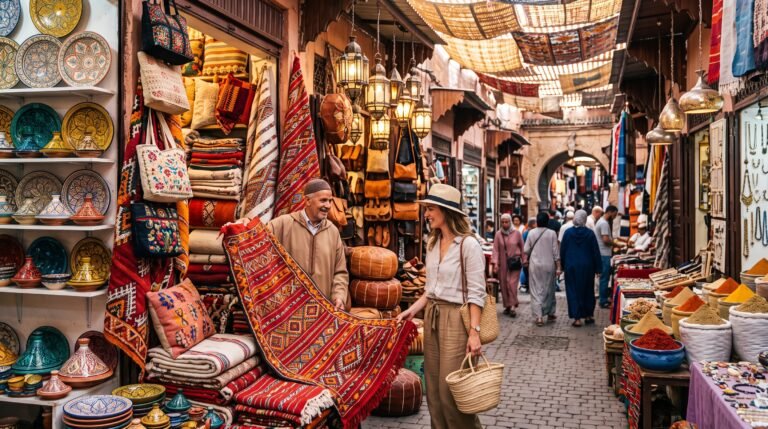
When you walk into the heart of the ancient Medina or stand in the center of the famous Jemaa el-Fnaa square, a friendly shopkeeper might greet you in ten different languages within ten seconds, just to see which one makes you smile and respond! However, among locals, the primary language in Marrakech, Morocco is undeniably Darija. Furthermore, because the majestic High Atlas Mountains directly surround Marrakech, a massive percentage of the local residents are native Tashelhit (Amazigh) speakers who migrated to the city for work.
For modern travelers, English now serves as the absolute standard inside traditional Riads, luxury hotels, and tourist-facing restaurants. If you decide to immerse yourself by booking a walking tour of Marrakech, rest assured that your designated guide will speak flawless English, alongside French and Arabic, ensuring you don’t miss a single historical detail.
🎯 Expert Tip: When you head out for a Marrakech desert experience or stay in a high-end luxury Riad, English is the expected standard. You will have zero issues communicating. However, if you venture deep into the authentic, “local” residential parts of the Medina to buy bread or street food, sprinkling in a few Darija or French words will help you navigate the alleys like a seasoned pro.
Language and Identity in Morocco
Language in the Moroccan Kingdom represents far more than just basic communication; it acts as a deep marker of personal and historical identity. Moroccans feel exceptionally proud of their “Diglossia”—which is the academic term for the ability to instinctively use completely different languages for different social situations.
- Spiritual Identity: Modern Standard Arabic deeply connects Moroccans to their Islamic faith, the Quran, and the wider international Muslim community.
- Indigenous Identity: The Amazigh language proudly represents the ancient, unbroken, and fiercely independent history of North Africa before outside influences arrived.
- National Identity: Darija is the ultimate unifier. It is what makes someone truly “Moroccan.” It is the heartfelt language of local humor, vibrant street music, and family dinner tables.
- Global Identity: English and French serve as the crucial windows to the international business world, higher education, and global pop culture.
This linguistic juggling act often results in “Code-Switching” (the habit of changing languages mid-sentence without pausing). It is a normal part of daily life. Do not feel confused or surprised if you hear a Moroccan casually say: “Ça va? Labas? Everything is good?”—blending French, Arabic, and English all in one single, welcoming breath!
Practical Language Tips for Travelers
You certainly do not need to be fluent in any local dialect, but memorizing a few select phrases will massively enhance your curated what to do in Morocco itinerary. Locals appreciate the effort more than perfect pronunciation. Here are the most essential words for your 2026 adventure.
Essential Moroccan Arabic (Darija) Phrases
| English Phrase | Darija (Phonetic Pronunciation) | Best Context to Use It |
|---|---|---|
| Hello / Peace be upon you | Salam Alaikoum | The most important daily greeting. Always start conversations with this. |
| Thank you (very much) | Shukran (Bezaf) | Use this constantly. Moroccans value polite appreciation. |
| How much is this? | Bsh-hal? | Absolutely crucial when following any Marrakech shopping guide in the souks. |
| Please | Afak | Simple politeness goes a very long way in local cafes. |
| No problem | Mashi Mushkil | The Moroccan equivalent of “Hakuna Matata.” Use it when things get delayed. |
| God willing / Hopefully | Inshallah | Used for any future plans. “See you tomorrow, Inshallah.” |
| Enough / Stop | Baraka | Extremely useful when a street vendor becomes slightly too persistent. |
| Delicious / Beautiful | Zwin (or Zwina) | Compliment the chef by calling the tagine “Zwin.” |
Language Survival Tips for Your Trip
- Body Language is Key: In remote rural areas or deep inside Medina alleys where English might be scarce, non-verbal cues matter. Placing your right hand over your heart after shaking hands is a beautiful, traditional sign of sincerity and thanks.
- English is Enough in Cities: Do not panic about language barriers. In major hubs like Marrakech, Fes, and Casablanca, you can survive perfectly well and have a fantastic time using only English.
- French for Logistics: Keep Google Translate handy for French. You will use French primarily for reading restaurant menus, checking train schedules, and communicating during pharmacy visits.
- Hire a Professional: If you feel anxious about haggling in the markets or missing historical context, booking a private tour of Marrakech ensures you have a fluent local translator by your side 24/7.
- The “Salam” Rule: This is a major cultural rule. Never walk up to a stranger to ask for directions or demand a price without saying “Salam Alaikoum” first. It is considered quite rude to skip the greeting and jump straight to business.
“A man who speaks two languages is worth two men.” — Traditional Moroccan Proverb.
In Morocco, because of their incredible linguistic flexibility, most people on the street are easily worth three or four!
What Is Standard Moroccan Berber?
Standard Moroccan Berber usually refers to Standard Amazigh (Tamazight), one of Morocco’s official languages. It is the standardized form of the Amazigh language used in schools, government publications, and public institutions across the country.
While many Moroccans speak regional Amazigh languages such as Tarifit, Tashelhit, and Central Atlas Tamazight, Standard Amazigh provides a common written form that helps unify communication and education.
Visitors to Morocco do not need to learn Standard Moroccan Berber to travel comfortably. Most tourists communicate in Moroccan Arabic (Darija), French, English, or Spanish, depending on the region. However, learning a few Amazigh greetings can be appreciated, especially when visiting villages in the Atlas Mountains or other Amazigh-speaking areas.
Is Standard Moroccan Berber the Same as Tamazight?
Yes. In most contexts, the term Standard Moroccan Berber refers to Standard Amazigh (Tamazight). It is based on several Amazigh dialects and is written using the Tifinagh alphabet, which appears on road signs, schools, and official government documents throughout Morocco.
Is Standard Moroccan Berber an official language?
Yes. Amazigh became an official language of Morocco alongside Arabic in 2011. Today, Standard Amazigh is used in schools, public institutions, and official documents.
What alphabet does Standard Moroccan Berber use?
Standard Moroccan Berber is written using the Tifinagh alphabet, the official script adopted for teaching and public signage in Morocco.
Do tourists need to learn Standard Moroccan Berber?
No. Most travelers can communicate using Moroccan Arabic (Darija), French, English, or Spanish. However, learning a few Amazigh greetings is appreciated in many Amazigh-speaking communities.
FAQs — Languages in Morocco
What is the official language of Morocco?
The Moroccan constitution officially recognizes two languages: Modern Standard Arabic and Amazigh (Berber). The government uses these languages for laws, schools, and official state broadcasting. However, French operates heavily as the unofficial language of business and higher education.
Do Moroccans speak French?
Yes, French remains extremely widespread. A large portion of the population understands and speaks French, especially in urban cities and among university-educated professionals. You will encounter French constantly in corporate settings, luxury hotels, and modern restaurants.
What language is spoken in Marrakech most commonly?
Among the local residents, Darija (Moroccan Arabic) stands as the most commonly spoken daily language. However, because Marrakech thrives as a massive global tourism hub, you will hear a continuous flow of English, French, Spanish, German, and Italian while walking through the city streets.
Can I get by with just English in Morocco?
Yes, absolutely, especially as we move through 2026. English proficiency has skyrocketed in the tourism and hospitality sectors. Most younger Moroccans actively prefer learning and speaking English over French. You will easily navigate hotels, guided tours, and popular restaurants using only English.
Is Moroccan Arabic (Darija) easy to learn?
Picking up the basic conversational pleasantries (hello, thank you, please) is quite easy and fun. However, mastering the dialect is notoriously difficult for foreigners because it breaks standard Arabic grammar rules and mixes multiple languages. Using a professional tour guide in Marrakech can greatly help you practice and learn new phrases contextually as you explore.
Final Thoughts: Morocco’s Multilingual Magic ✨
So, to finally answer the grand question: what language do they speak in Morocco? The true answer reveals a beautiful, chaotic, and incredibly functional mix of voices. Morocco represents a unique land where the soaring call to prayer in Classical Arabic effortlessly mingles with the sharp French of a modern business deal, the welcoming English of a tourist excursion, and the ancient, earthy Tamazight of the high mountain villages.
Whether you are bravely navigating a self-guided walking tour of Marrakech or taking scenic day trips from Marrakech out to the breezy coastal towns, you should never fear the language barrier. Moroccans are historically world-class communicators. They will patiently go out of their way to understand you and make you feel at home. Embrace the relaxed “Mashi Mushkil” (no problem) attitude, try to learn a few simple words of Darija, and you will quickly discover that Morocco speaks directly to your heart in a welcoming language that completely transcends words.
Planning your 2026 trip?
Ensure you enjoy a perfectly smooth start to your vacation by exploring our highly recommended Moroccan travel guides and top-rated booking services. The magic of Morocco is waiting for you! Book Your Marrakech Experience Now
7 Comments