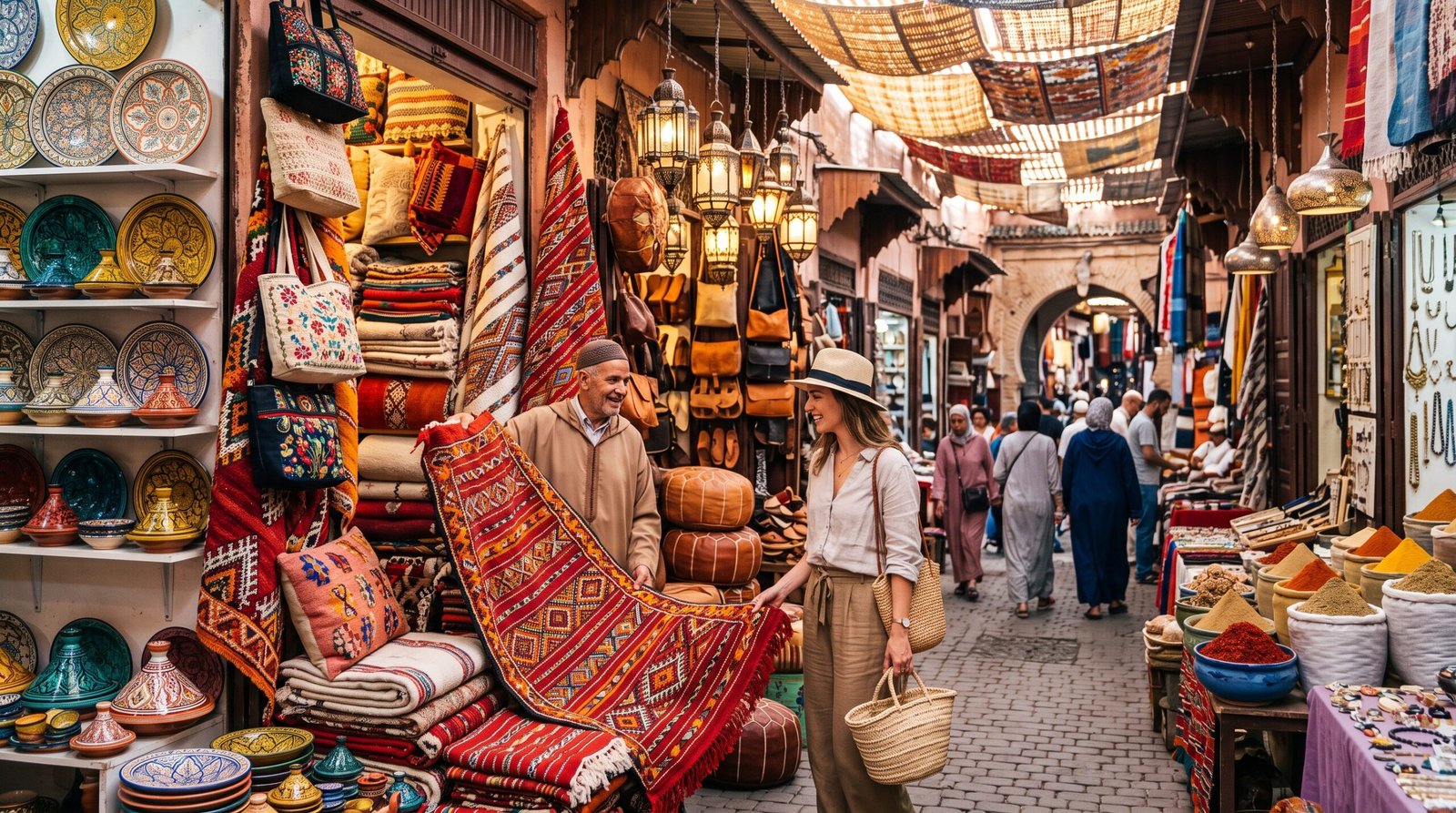
Marrakech Shopping Guide: 7 Secrets to Finding the Best Souvenirs
Marrakech is a city that captures your senses from the moment you arrive. Known as the “Red City” due to its ochre-colored buildings, it offers an atmosphere you won’t find anywhere else on Earth. For many travelers, the highlight of the trip isn’t just the palaces or the gardens—it is the shopping. This marrakech shopping guide is designed to help you navigate the beautiful labyrinth of treasures found within the ancient Medina.
Shopping in Marrakech is much more than a simple transaction. It is a cultural dance, an ancient tradition, and a social event. Whether you are looking for hand-knotted Berber rugs, vibrant Moroccan spices, or luxury leather goods, the Medina has it all. In this marrakech shopping guide, we ensure you bring home authentic souvenirs that tell a story while avoiding common tourist traps.

Understanding the Layout: Where to Use Your Marrakech Shopping Guide
Before you dive into the narrow alleys, you need to understand the city’s layout. Marrakech is essentially split into two main areas: the ancient Medina and the modern Gueliz. Most of your traditional shopping will happen within the walls of the Medina, a UNESCO World Heritage Site. However, a complete marrakech shopping guide must also mention the modern districts for those seeking a different pace.
The Medina and the Specialized Souks
The Marrakech Medina is the heart of the city. Inside, you will find “souks”—specialized market areas grouped by the type of product sold. For example, one area might only sell slippers, while another focuses on metalwork. It is a maze, and getting lost is part of the fun. If you feel overwhelmed, taking a walking tour Marrakech is a great way to find your bearings and see the layout firsthand.
Gueliz and Sidi Ghanem: The Modern Side
If you prefer a quieter experience with fixed prices, head to Gueliz. This is the modern part of town where you will find contemporary Moroccan designers and high-end boutiques. For those interested in industrial design and home decor, Sidi Ghanem is the trendy district where local artists have their workshops. This marrakech shopping guide recommends Sidi Ghanem for travelers looking for bulky furniture or modern art that departs from traditional styles.
“To shop in Marrakech is to participate in the living history of the Maghreb. Every carpet and teapot carries the soul of the artisan who made it.” — Local Artisan at Souk Semmarine.
The Must-Buy List: Gems of the Red City
The variety of handicrafts in Morocco is staggering. However, certain items are iconic. This part of our marrakech shopping guide highlights the items you shouldn’t leave without. The craftsmanship here involves techniques passed down through generations of “Maalems” (master craftsmen).
1. Authentic Berber Rugs and Textiles
Moroccan rugs are world-famous for their quality and symbolism. You will find Beni Ourain rugs (known for their thick white pile and black geometric lines) and Kilim cushions in almost every corner. These rugs often use vegetable dyes like indigo, saffron, and poppy. A high-quality rug can last a lifetime, making it the ultimate centerpiece for your home. When using this marrakech shopping guide, remember that hand-knotted rugs are more valuable than machine-made versions.
2. Handcrafted Leather Goods
The Souk Cherratine is the place to be for leather. Marrakech has a long history of tanning and leatherwork, particularly in the famous tanneries near the Bab Debbagh gate. You can find high-quality Babouches (traditional Moroccan slippers), leather poufs, and custom-made jackets. Ensure the leather is genuine by checking the smell and texture—authentic leather should have a natural, earthy scent, not a chemical one.
3. Exotic Spices and Beauty Products
No marrakech shopping guide is complete without mentioning the Rahba Kedima (Spice Square). The colors and scents here are hypnotic. Look for Ras el Hanout, a complex spice blend containing dozens of ingredients. You can also find Pure Argan oil, rose water, and Ghassoul clay for natural skincare. This is the perfect place to buy gifts for friends back home.
Comparison: Souk Shopping vs. Modern Boutiques
Deciding where to spend your money depends on your comfort level with bargaining. Use this comparison table within our marrakech shopping guide to decide which environment suits your style.
| Feature | The Souks (Medina) | Modern Boutiques (Gueliz) |
|---|---|---|
| Pricing Style | Negotiable (Haggling is required) | Fixed Prices (No stress) |
| Atmosphere | Vibrant, busy, traditional | Calm, modern, sleek |
| Product Authenticity | Traditional and tribal crafts | Fusion and contemporary design |
| Payment Options | Cash is King (MAD) | Cards widely accepted |
The Art of Haggling: 10 Practical Tips
For many westerners, bargaining can feel awkward. However, any marrakech shopping guide will tell you that it is expected. The first price mentioned is usually a starting point. Here is how to navigate the process with a smile and respect for the local culture.
- Start with a Smile: Greet the seller with “Salam Alaykum.” A friendly attitude opens doors.
- Research Prices: Visit the Ensemble Artisanal first. This state-run shop has fixed prices, giving you a baseline for what items should cost.
- The 50% Rule: Offer about half of what they ask, then work your way to a middle ground.
- Stay Calm: Haggling is a conversation, not a battle. If you get angry, you lose.
- Walk Away: If the price isn’t right, thank them and walk away. This is the most powerful tool in your marrakech shopping guide toolkit.
- Carry Small Change: Sellers rarely “have change” when you negotiate a low price.
- Don’t Start if You Won’t Buy: Only begin bargaining if you actually want the item.
- Group Your Purchases: Buying three items from the same shop gives you more leverage.
- Avoid “Helping” Hands: Random people offering to lead you to a “good shop” usually take a commission, which increases your price.
- Enjoy the Tea: If offered mint tea, it’s a sign of hospitality. You can drink it without feeling obligated to buy.
If you find the process too stressful, you might prefer a private tour Marrakech where a professional guide can assist you with local pricing and etiquette.
A Deep Dive into the Most Famous Souks
To use this marrakech shopping guide effectively, you need to know which souk sells what. The Medina is a giant puzzle of interconnected markets.
Souk Semmarine: The Gateway
This is the main artery of the shopping district. It is wide and covered, selling everything from high-end textiles to colorful pottery. Many shoppers start their journey here before branching off into smaller, more specialized areas.
Souk el Attarine: The Scent of History
This is the “spice and perfume souk,” but it is also famous for its stunning Moroccan lanterns and brass mirrors. The way the light hits the metalwork in this area is a photographer’s dream. It is a highlight of any marrakech shopping guide walking route.
Souk Haddadine: The Blacksmiths
You will hear the rhythmic sound of hammers hitting metal before you see it. This is the best place to buy authentic iron lanterns, gates, and kitchenware directly from the makers. Watching the artisans work is a masterclass in artisan craftsmanship.
Souk des Bijoutiers: The Jewelry Hub
The Jewelry Souk is where you will find intricate Silver Berber jewelry and gold pieces. If you are looking for something unique and antique, this is your destination. Always check for the hallmark on silver pieces to ensure quality.
How to Spot Quality and Avoid Scams
While most shopkeepers are honest artisans, it is important to be a savvy shopper. This marrakech shopping guide includes a quick checklist to ensure you are getting the real deal.
- The Rug Burn Test: To check if a rug is real wool, pull a small thread and burn it. Real wool smells like burning hair. Synthetic fiber smells like plastic and melts.
- Check Leather Stitching: Look at the stitching on Babouches or bags. It should be straight and tight. If you see glue or loose threads, it’s likely a mass-produced item.
- The Saffron Water Test: Real saffron should color water yellow, not red. It also remains intact when wet, while fake versions will disintegrate.
- Ceramic Weight: Hand-painted Moroccan ceramics have a certain weight and minor imperfections. If every plate looks 100% identical and is very light, it might be factory-made for tourists.
Logistics: Shipping and Getting Around
Shopping can be exhausting, and carrying heavy bags through the Medina is no fun. This marrakech shopping guide wouldn’t be complete without advice on how to get your treasures home safely. Most of the Medina is car-free, so you will be doing a lot of walking.
For your arrival or when you have too many shopping bags to handle, it’s best to book a reliable transfer. You can find great options for getting around here:
If you are buying large items like Berber rugs or furniture, most shops offer international shipping via DHL or FedEx. It is often cheaper and safer than trying to carry it on a plane. Always get a tracking number and a signed receipt from the vendor. A professional marrakech shopping guide always suggests photographing your item and the receipt before leaving the shop.
Beyond the Souks: Exploring the Region
Once you’ve filled your bags, take time to enjoy the other wonders of the region. Many shoppers find that a day trip from Marrakech provides a much-needed break from the hustle of the souks.
You can head to the mountains to see where the wool for your rugs is sourced or explore the Marrakech desert experience. Understanding the landscape helps you appreciate the artisan craftsmanship even more. Whether you are interested in a desert trip from Marrakech or a quiet day in a garden, the city offers endless variety.
If you’re looking for more activities to round out your trip, check out these popular tours:
Practical Information for Every Shopper
To make your experience smoother, keep these practical tips from our marrakech shopping guide in mind:
Currency and Cash Tips
The local currency is the Moroccan Dirham (MAD). While larger shops and boutiques in Gueliz accept credit cards, the vast majority of souk vendors only accept cash. There are plenty of ATMs around Jemaa el-Fnaa, but they can sometimes run out of cash during busy weekends.
When to Shop
Most souks open around 9:30 AM and close around 8:00 PM. Note that Friday is a holy day. Many shops close around midday for prayer, and some may not open at all. This marrakech shopping guide recommends Saturday through Thursday for the best shopping experience.
What to Wear in the Medina
Marrakech is a traditional city. While there is no strict dress code for tourists, wearing modest clothing (covering shoulders and knees) is respectful. It also helps you blend in slightly more, which can sometimes lead to better pricing during negotiations.
Frequently Asked Questions
Is it safe to shop alone in the souks?
Yes, it is generally very safe. However, the Medina is a labyrinth. Keep your phone charged and use an offline map. If you feel lost, ask a shopkeeper for directions rather than someone standing in the street. Following a marrakech shopping guide helps you stay on the main paths.
How much should I pay for a rug?
Prices vary wildly based on size, material, and age. A small Kilim might cost 500 MAD, while a large, vintage Beni Ourain can cost thousands. Always compare prices in a few shops before committing.
Can I get a refund if I change my mind?
In the souks, refunds are almost non-existent. Once you have agreed on a price and paid, the deal is final. This is why our marrakech shopping guide emphasizes checking the quality of the item thoroughly before handing over your money.
Conclusion: Your Adventure Awaits
We hope this marrakech shopping guide helps you navigate the vibrant, colorful, and sometimes chaotic world of the Red City. From the scent of fresh Moroccan mint tea to the beautiful textures of hand-woven textiles, shopping here is an experience you will never forget. You aren’t just buying an object; you are buying a piece of Moroccan culture.
Remember to take your time, enjoy the process, and look for items that truly speak to you. Whether you leave with a suitcase full of leather poufs or just a small bottle of Argan oil, the memories of the Marrakech souks will stay with you forever. Use this marrakech shopping guide as your roadmap to the best the city has to offer.
Ready to start your journey? Don’t forget to book your Marrakech stay early to get the best riads in the heart of the Medina! For more travel inspiration, check out our travel to Marrakech portal.



3 Comments